
Bisleri's packaged water fails 2 lab tests for toxic compounds, FSSAI sanctions prosecution
Bisleri's packaged water fails 2 lab tests for toxic compounds, FSSAI sanctions prosecution
Despite the sanction for legal proceedings, the FSSAI has not disclosed which specific product variant, manufacturing plant, or batch number was linked to the non-compliant sample. The regulator has also not issued a nationwide product recall.
Business Today Desk
- Nov 23, 2026,
- Updated Nov 23, 2026 10:59 AM IST
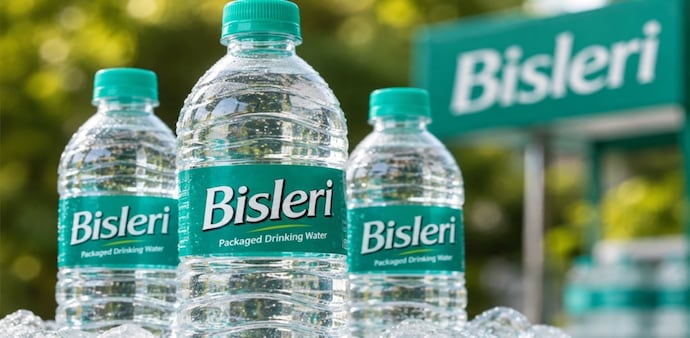
A routine regulatory sample pulled from Bisleri International’s premises has failed two separate laboratory examinations, prompting India’s apex food safety regulator to clear legal prosecution against the country’s most recognizable bottled water brand.
On November 22, 2026, the Food Safety and Standards Authority of India (FSSAI) announced that it had granted formal sanction to launch prosecution against M/s Bisleri International Pvt Ltd under the Food Safety and Standards (FSS) Act, 2006. The enforcement action followed a sequence of laboratory findings that flagged chemical contaminants in a sample of "Packaged Drinking Water (other than Mineral Water)".
Advertisement
Two tests, two faliures
The regulatory sequence began when FSSAI officials collected a sample of packaged drinking water directly from Bisleri International's premises for quality analysis. Initial laboratory testing revealed that the sample did not comply with prescribed bromate limits, leading the regulator to declare the water unsafe under the FSS Act, 2006.
Bromate is a chemical disinfection byproduct formed when ozone used to purify water reacts with naturally occurring bromide; in India, the maximum permissible limit is 0.01 mg/L.
Bisleri International exercised its statutory right to appeal the initial laboratory report. Following the food business operator's appeal, the FSSAI forwarded the sample to a Referral Food Laboratory for a second, independent examination.
The referral analysis upheld the unsafe classification, though on different chemical grounds. While the first test flagged excess bromate, the Referral Food Laboratory detected polynuclear aromatic hydrocarbons (PAHs) — environmental pollutants that can pose toxicity risks when present above safe thresholds.
Advertisement
"The laboratory findings established violations relating to unsafe food under the FSS Act, 2006. Sanction has been granted to launch prosecution under the FSS Act, 2006, against M/s Bisleri International Pvt Ltd," the FSSAI stated in its official communication.
In a statement, Bisleri said, "We are aware of recent media reports that the Food Safety and Standards Authority of India (FSSAI) has issued a notice to Bisleri. The matter dates back approximately 14 months, to a batch produced in September 2025 at Bisleri’s Goa manufacturing facility, one of 143 plants in our network."
Explaining the FSSAI action, the company said, "On 30 September 2025, FSSAI collected six samples from the Goa facility. Initial testing found that five samples met all applicable standards. The sixth recorded a bromate level of 12 micrograms per litre, against the prescribed limit of 10 micrograms per litre. Following Bisleri’s appeal dated 22 November 2025, FSSAI sent that sample to a referral laboratory for retesting.
Advertisement
The referral laboratory found bromate of the sample within the prescribed limit and separately flagged polynuclear aromatic hydrocarbons (PAHs) in the sample. The difference between the two results raised questions that Bisleri believed warranted clarification. Bisleri arranged for the same sample to be tested independently at an FSSAI-approved laboratory. That test found bromate within the prescribed limit.
We submitted the independent test results to FSSAI’s Western Regional Office with a formal letter dated 2 February 2026. We received no further communication from FSSAI after that submission and understood the matter to be closed. To date, Bisleri has received no notice by email or in hard copy and has been unable to locate the reported notice on FSSAI’s website."
"Drinking water safety is a priority for Bisleri. We maintain stringent quality controls of over 90 tests across our 10-step manufacturing process and will continue to cooperate with FSSAI to address the matter through the appropriate regulatory process. A trusted brand for years, Bisleri remains safe for consumption," the company added.
Consumer impact
Despite the sanction for legal proceedings, the FSSAI has not disclosed which specific product variant, manufacturing plant, or batch number was linked to the non-compliant sample. The regulator has also not issued a nationwide product recall, and the company has not been adjudicated guilty by a court at this stage.
Advertisement
The regulatory action places intense scrutiny on a market leader whose brand identity is built around purity. Operating 140 plants supported by 5,080 distributors and 8,270 distribution trucks across India and neighbouring countries, Bisleri markets its water with the tagline "Quality you can trust in every drop".
On its corporate website, the company states that every bottle undergoes a 10-step purification process and 90 quality tests to comply with the Food Safety and Standards Regulations, 2011. Bisleri International had not issued an official response to media queries regarding the prosecution sanction at the time of reporting.
Broader regulatory crackdown
The action against Bisleri forms part of a wider enforcement sweep by the FSSAI across India's packaged food and beverage sector. Effective January 1, 2026, the authority rolled out a mandatory testing scheme requiring manufacturers to conduct prescribed checks, maintain batch-wise testing records, and execute corrective measures when samples fail safety benchmarks.
Alongside the Bisleri order, the regulator simultaneously sanctioned prosecution against four other food businesses — Vasant Masala Pvt Ltd, Tit-Bit Foods (India) Pvt Ltd, Mimansa Industries Private Limited, and Asha Confectionery — over violations ranging from excess pesticide residues and tin in spices to misbranded, substandard cookies. The FSSAI also suspended the operating licences of Urmi Lifesciences LLP and Gaur Ayurvedic Store over hygiene and repacking violations.
Read more!