










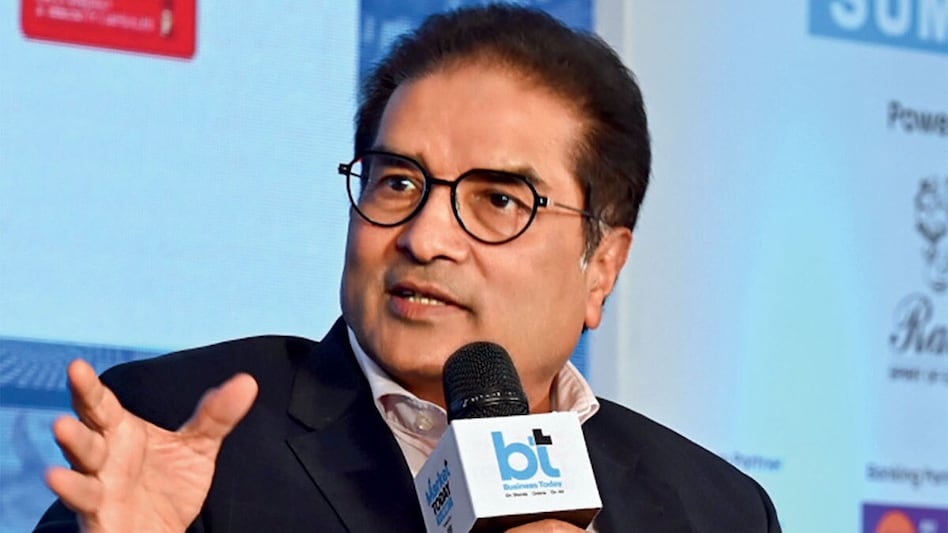
 In a stock that delivers 100 times returns over two decades, a disproportionate amount of wealth creation typically happens in the final few years, Agrawal said.
 In a stock that delivers 100 times returns over two decades, a disproportionate amount of wealth creation typically happens in the final few years, Agrawal said.
Multibagger stock: Raamdeo Agrawal recently recalled one of his investments that he made in 2003, which went on delivering him multibagger returns. The stock market veteran said he saw scepticism from peers and friends but he held on to his conviction. The result: He finally sold the stock that he accumulated in the Rs 19-30 range, at Rs 650 odd levels. At Groww India Investor Festival 2026, Agrawal admitted he sold some shares early under pressure, buy he held on to a significant portion. His final exit came years later at around Rs 650, translating into roughly a 25-fold return. The stock was Bharti Airtel Ltd.
"At the time, India had only around 50 million fixed-line phones for a population exceeding one billion," Agrawal said at Groww India Investor Festival 2026, noting he estimated Bharti Airtel to generate Rs 27,000–28,000 crore in profits over the following five years, even though Bharti Airtel's market capitalisation was only at around Rs 5,000 crore then.
In 2003, after studying the economics of network businesses and speaking with Sunil Bharti Mittal, Agrawal became convinced that India’s mobile revolution would create enormous value. “I was alone all the way through,” he recalled.
For Agrawal, the formula for identifying outsized winners comes down to three things: vision, courage and patience. “Whenever you are hitting a big one, you are mostly alone,” he said. “You need conviction to stay with it.”
He noted that investors often underestimate how compounding works over long periods. In a stock that delivers 100 times returns over two decades, a disproportionate amount of wealth creation typically happens in the final few years.
“You sit through 19 years because most of the compounding comes in the 19th and 20th year,” he said.
At present, said Raamdeo Agrawal, ouick commerce reminds him of Bharti Airtel in 2003.
Agrawal drew parallels between India’s quick commerce (QC) industry and the early days of telecom, saying companies operating in the QC segment are still in the heavy cash-burn phase, but the underlying network effects could eventually create very large businesses.
“This is a Bharti moment,” he said, referring to the potential scale of India’s quick commerce opportunity.
He cited comments from global retail executives, including leadership at Walmart, describing India’s quick commerce ecosystem as a glimpse into the future of retail.
 Sensex at 3,00,000! Why Raamdeo Agrawal calls India a 'Ferrari', his multibagger ideas & stocks he avoids
 Sensex, Nifty: 5 reasons why stock market is falling today
 Kashi–Bengal Expressway put on fast track; Centre may tweak Bengal stretch over wildlife concerns
 iPhone 17 Pro, iPhone 17 Pro Max gets up to 11% discount during Flipkart sale
 ‘The need of the hour…’: Why PM Modi urged everyone to resume WFH
 Inside Delhi’s ‘Café Beyond Eyes’ Run Completely By Blind Girls
 "India Rose To The Occasion": EAM Recalls How Vaccine Maitri Saved The Global South
 Killer On Board: Rare Hantavirus Leaves 3 Dead On Atlantic Luxury Cruise
 Muridke To Bahawalpur: How India Systematically Dismantled Pakistan's Terror Hubs
 Mother’s Day: How To Secure Your Mother’s Financial Future | SIPs, Insurance & Retirement
 Sensex at 3,00,000! Why Raamdeo Agrawal calls India a 'Ferrari', his multibagger ideas & stocks he avoids
 Indian Hotels, Easy Trip, Thomas Cook, Lemon Tree, IRCTC shares fall up to 4%; here's why
  Why Reliance Industries, BPCL, HPCL, IOC shares are falling today
 Why Titan, Senco Gold, PNG, Kalyan, Sky Gold & other jewellery stock tank up 12% on MondaySensex, Nifty: 5 reasons why stock market is falling today