










 India’s market capitalisation has compounded at roughly 14 per cent annually in dollar terms over the last two decades
 India’s market capitalisation has compounded at roughly 14 per cent annually in dollar terms over the last two decades
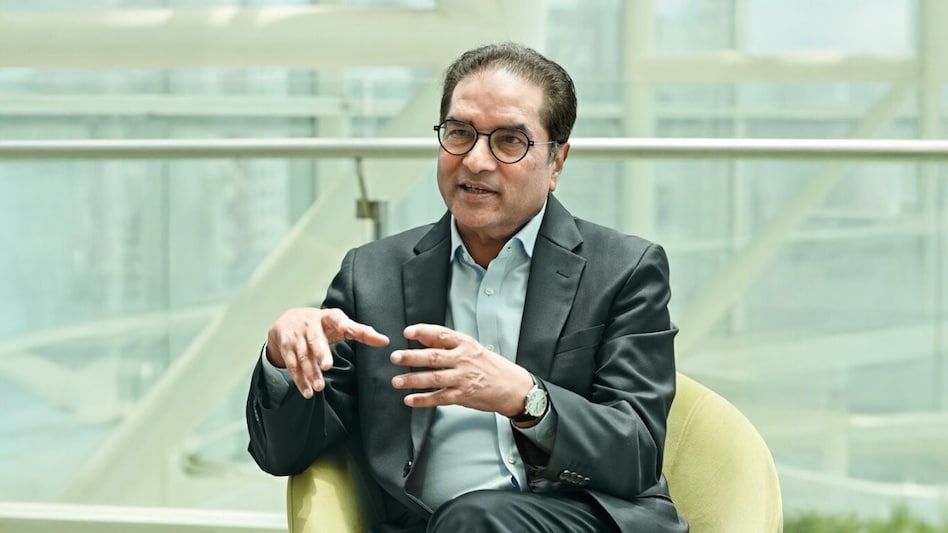
Market veteran Raamdeo Agrawal, who sees India among world's best hunting grounds for multibagger stocks, believes India's capital markets ecosystem and quick commerce could create the next wave of multibaggers. His investing philosophy centred on finding businesses operating in fast-growing industries within fast-growing economies. At Groww’s 10th foundation event – India Investor Festival, he citied an internal study by Motilal Oswal -- inspired by Thomas Phelps’ book 100 to 1 in the Stock Market, and said nearly 20 per cent of companies in the NSE 500 delivered over 25 per cent annualised returns for a decade, effectively becoming 10-baggers. The comparable figure in the S&P 500, he said, was just 7 per cent.
The Chairman and Co-founder, Motilal Oswal Financial Services, who projected per capita income in India could double over the next six to seven years and sees Sensex to touch 1.5 lakh by 2030 and potentially 3 lakh by 2036, said his the formula for identifying outsized winners comes down to three things: vision, courage and patience.
“Multi-bagging happens where growth is fastest,” he said. “You get the maximum multi-baggers in the country which is growing fastest and in the industry which is growing fastest,” Agrawal, who was a speaker at Groww’s 10th foundation event – India Investor Festival, said at the event.
For Agrawal, the 3,00,000 level on Sensex in 12 years is more guaranteed than one-and-a-half lakh in six years. “That is how compounding works,” he said.
Agrawal said investors often underestimate how compounding works over long periods. In a stock that delivers 100 times returns over two decades, a disproportionate amount of wealth creation typically happens in the final few years, he said. “Whenever you are hitting a big one, you are mostly alone,” he said. “You need conviction to stay with it.”
Why India is a Ferrari
Agrawal said some Asian regions are currently benefiting from an AI-led earnings cycle. But he argued that India’s long-term structural trajectory remains unmatched. He drew a comparison between India’s Sensex and South Korea’s KOSPI — both launched on January 1, 1980, saying the Korean benchmark is around 5,000 points today, the Sensex has climbed past 80,000.
“Form may be temporary, but class is permanent. India is the way to go,” he said while calling India a Ferrari.
According to Agrawal, India’s market capitalisation has compounded at roughly 14 per cent annually in dollar terms over the last two decades, compared with around 7 per cent for the US market. “Every five to six years, you double. That is the pace,” he said.
Next multibaggers
Agrawal, as per a summary of the event shared, said India's capital market is adding nearly 30 new customers every month, noting India already has more than 22 crore demat accounts. By 2031–32, he anticipated thisigure to reach 50–60 crore.
Agrawal also drew parallels between India’s quick commerce industry and the early days of telecom. He said companies operating in the segment are still in the heavy cash-burn phase, but the underlying network effects could eventually create very large businesses.
“This is a Bharti moment,” he said, referring to the potential scale of India’s quick commerce opportunity.
He cited comments from global retail executives, including leadership at Walmart, describing India’s quick commerce ecosystem as a glimpse into the future of retail.
What Agrawal avoids completely
Agrawal said he maintains strict filters while evaluating businesses. He said he avoids companies generating return on equity below 20 per cent and pays close attention to receivables cycles as an indicator of business quality. “If return on equity is 9 or 10 per cent, I do not even want to enter the meeting,” he said.
Management quality, however, remains his biggest filter.
“They will go to hell and take you along,” he said, referring to promoters with compromised governance standards.
Agrawal also stressed the importance of visiting factories and observing operations first-hand instead of relying solely on management presentations. As per him, rising retail participation will create opportunities across brokers, exchanges, asset managers, wealth platforms and depositories.
Agrawal, meanwhile, admitted to missing out on the sharp rally in BSE despite understanding the sector deeply. “The stock went up almost 50 times and I did not make a single paisa,” he said with a laugh.
 Sensex at 3,00,000! Why Raamdeo Agrawal calls India a 'Ferrari', his multibagger ideas & stocks he avoids
 Sensex, Nifty: 5 reasons why stock market is falling today
 Kashi–Bengal Expressway put on fast track; Centre may tweak Bengal stretch over wildlife concerns
 iPhone 17 Pro, iPhone 17 Pro Max gets up to 11% discount during Flipkart sale
 ‘The need of the hour…’: Why PM Modi urged everyone to resume WFH
 Inside Delhi’s ‘Café Beyond Eyes’ Run Completely By Blind Girls
 "India Rose To The Occasion": EAM Recalls How Vaccine Maitri Saved The Global South
 Killer On Board: Rare Hantavirus Leaves 3 Dead On Atlantic Luxury Cruise
 Muridke To Bahawalpur: How India Systematically Dismantled Pakistan's Terror Hubs
 Mother’s Day: How To Secure Your Mother’s Financial Future | SIPs, Insurance & Retirement
 100% upside? Why Swiggy shares tumbled 7% today; what analysts say
  Why Lupin shares downgraded to 'Hold' despite robust Q4 PAT growth | Target price
 Why Swiggy, Eternal shares are falling today
 RFBL Flexi Pack IPO opens on May 12; check all key detials
 From Rs 19 to Rs 650: This Raamdeo Agrawal's 2003 stock bet delivered multibagger returns