









 He pointed to features like secure messaging, audio-video calls, and real-time translation as key building blocks in this mission.
 He pointed to features like secure messaging, audio-video calls, and real-time translation as key building blocks in this mission.
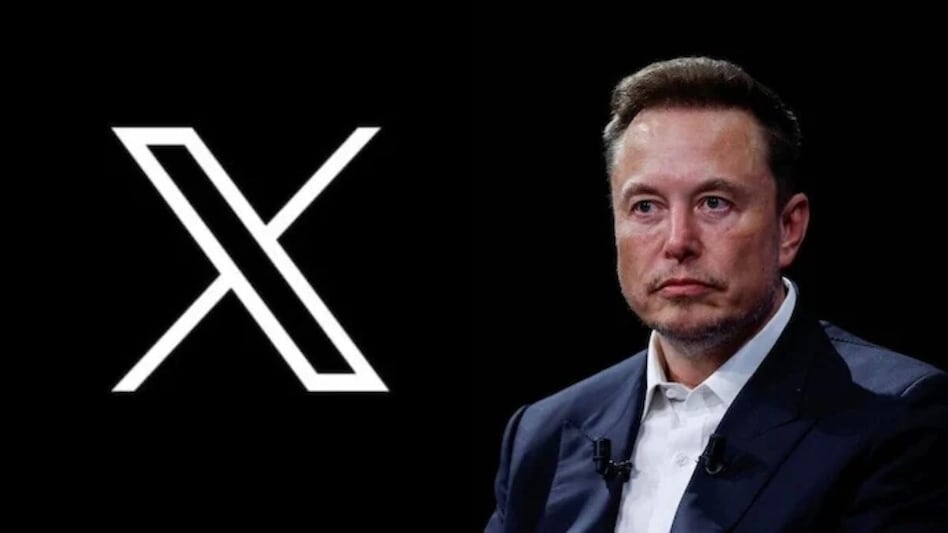
What began as a microblogging platform is, in Elon Musk’s hands, being reshaped into a bold experiment in global communication, commerce, and consciousness. Speaking to investor and entrepreneur Nikhil Kamath on the People of WTF podcast, Tesla CEO and xAI founder Elon Musk laid out his vision for X—the platform formerly known as Twitter.
“We’re building a global town square,” Musk said, describing his ambitions for X not just as a social media network but as the digital foundation of humanity’s collective mind. The idea is as philosophical as it is practical. In a world of fragmentation and noise, Musk wants X to become a place where language barriers dissolve, conversations deepen, and the boundaries between media, messaging, and money disappear.
He pointed to features like secure messaging, audio-video calls, and real-time translation as key building blocks in this mission. With these, X could evolve into a unified communication platform — a place where billions interact across borders, in real time, without friction.
India’s fit in Musk’s digital blueprint
For a country like India, Musk’s vision has specific resonance. With its multilingual population, booming digital economy, and massive online user base, India is both a test case and a potential cornerstone for X’s future. Musk sees India’s diversity of thought and language not as a barrier, but as a strength that X can amplify.
He called the platform a space for “readers, writers, and thinkers,” noting that text remains central to its appeal — even in an internet increasingly dominated by video. “Among readers, writers, and thinkers, I think X is number one,” Musk said, making a sharp distinction from platforms driven by short-form, visual virality.
His point is well-taken in India, where text-based engagement continues to thrive — from opinion threads and longform commentary to citizen journalism and political debate. Unlike short video platforms, X has managed to retain a reputation as a place for serious discourse, which appeals strongly to the country's English-speaking, knowledge-driven users.
The WeChat++ playbook
But Musk’s vision doesn’t stop at communication. In his conversation with Kamath, he drew a parallel with China’s WeChat, the all-in-one super-app that handles everything from chatting and shopping to bill payments and booking taxis.
“It’s kind of WeChat++,” Musk said of X, indicating plans to integrate payments, commerce, content consumption, and more into a single, seamless platform. The comparison signals his ambition to make X the operating system of daily life — not just in the West, but globally.
This makes India an especially critical market. The country is already home to a growing crop of homegrown “super apps” from players like Tata Neu, Paytm, and PhonePe — each vying for dominance in a mobile-first nation. If Musk’s X can bring a global edge and unified functionality, it could emerge as a serious player in this crowded space.
A tech experiment with civilizational intent
What separates Musk’s plan for X from other app strategies is its philosophical underpinning. This isn’t just about attention or monetisation — it’s about building what he calls a “collective consciousness platform.” In his words, X is the foundation for a shared global mind, where thoughts, transactions, and conversations merge.
Whether that vision can overcome the regulatory, cultural, and competitive barriers ahead remains to be seen. For India, the implications are enormous. In a country defined by diversity and debate, X could either become the next great unifying platform — or one of its most ambitious digital experiments yet.
For Unparalleled coverage of India's Businesses and Economy – Subscribe to Business Today Magazine
 Delhi EV policy 2026: Should you buy these premium electric SUVs & MPVs under ₹30 lakh?
 Big news for commercial petrol, diesel buyers: India lifts emergency curbs on retail sales from July 1
  'Never seen so many tankers': India's Russian crude imports may hit record high in June
 Delhi EV Policy 2026 Explained: What's changing for car, bike and auto buyers
 Why Jio BlackRock feels hybrid long-short is the perfect fund to launch now as it enters the SIF space
 Why Jio BlackRock AMC Is Launching Hybrid Long-Short As It's First SIF
 Delhi Unveils ₹15,000 Crore EV Policy: What It Means For Auto Companies And Consumers
 Gold, Silver Or Crude? Where Should Investors Bet Now? | Vandana Bharti
 How India Strategically Managed LPG & Crude Oil Supplies During West Asia War | K. Surana Explains
 Delhi’s Green Revolution: CM Rekha Gupta Unveils Massive ₹15,000 Crore EV Policy To Combat Pollution
 Why Jio BlackRock feels hybrid long-short is the perfect fund to launch now as it enters the SIF space
 Where should investors put their money? PL Wealth CEO has some tips
  Axis Bank CFO Puneet Sharma steps down; stock likely in focus on Tuesday
 Apollo Hospitals, Medanta, Healthcare Global, Max Healthcare, Artemis Medicare: Check target prices, outlook
 Polycab: Amid record FII buying, shares at all-time high but brokerages expect more upside