












 Along with Delhi Gymkhana Club, the elite Breach Candy Club in Mumbai is also in focus
 Along with Delhi Gymkhana Club, the elite Breach Candy Club in Mumbai is also in focus
Congress MP Shashi Tharoor called out Breach Candy Club in Mumbai for its ‘racist provisions’ – notorious for being run by Europeans, while still enjoying benefits from government land. He dismissed the club’s ‘constitution’, pointing out that there is still a constitution that’s higher than the club’s rulebook.
“There is absolutely no acceptable justification for a racist provision to survive on government land. To say the club’s constitution requires it is ridiculous. What about our country’s constitution?” said Tharoor in response to a post who had asked the MP for a comment on the club. The X user, army veteran and geopolitical expert, Colonel Rohit Dev, said Breach Candy Club should not enjoy diplomatic immunity, and must intrinsically be Indian.
This discussion comes amid the eviction notice sent to Delhi Gymkhana Club, a seat of power and the elites for around a century. The government said that the prime Lutyens location is urgently required to ensure safety and security of the area. The club’s committee is now in conversation with the government.
ALL ABOUT BREACH CANDY CLUB
Amid this, all attention has also gone to the Breach Candy Club.
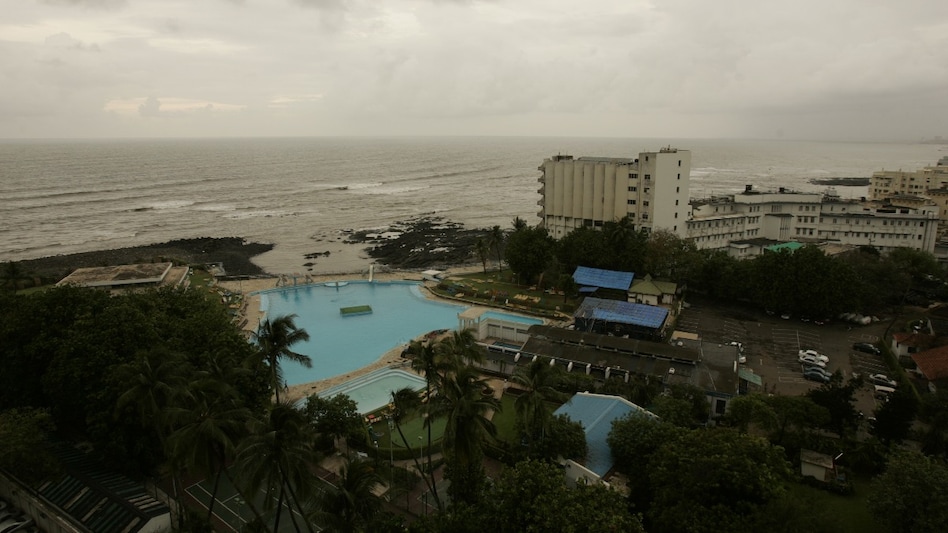
Officially known as the Breach Candy Swimming Bath Trust, the elite club is one of Mumbai's most exclusive institutions. It has a waiting list that extends beyond a decade and membership fees reportedly exceed ₹1.2 crore. Located on Bhulabhai Desai Road in South Mumbai's Breach Candy area, the club continues to operate under a governance structure that reserves real authority for Europeans even in 2026.
Founded in 1878 as a facility for European residents of Bombay, the club was initially a whites-only space. Indians were admitted as ordinary members only in the 1960s after public pressure following Independence. However, the club's core power structure was not fully democratised. Its constitution, approved by the City Civil Court in 1967, divides members into categories and grants control to trust members limited to "European inhabitants of Bombay”.
Only trust members can serve as trustees or sit on the managing committee, controlling governance, admissions, finances and policy. Ordinary members, numbering around 4,000 and now mostly Indian citizens, pay premium fees and have full access to the club's facilities but lack voting rights in trustee matters and cannot hold governing positions.
DON'T MISS | 'Won't take possession of Gymkhana on June 5': Centre in Delhi High Court
The club's membership mainly includes Mumbai's elite, such as prominent families, businesspersons, diplomatic families and old-money families. It occupies a prime four-acre seafront plot overlooking the Arabian Sea. A notable feature is its large outdoor saltwater pool shaped like the map of undivided British India. Members also use shaded decks, well-maintained tennis courts, and a sea-facing restaurant and bar serving grilled seafood and cocktails.
The club is seen as a rare example of old-world leisure in Mumbai, a city with limited land for such recreation. Shashi Tharoor has also, in the past, recalled being denied entry as a child despite an invitation from a foreign host.
 ‘Truth does not change with…’: Byju Raveendran responds to 6-months jail sentence
 Domestic airfare to rise further amidst Air India, IndiGo capacity cut
 Indian students now want jobs, visa clarity, ROI for studying abroad and this nation is emerging as their top choice
 ISM 1.0 gave India a seat at the chip table. ISM 2.0 will decide if it stays there
 Tata Sons board meeting on May 26: Battle is far from over; what transpired in the boardroom
 Global Tensions, Oil Shock & Dalal Street: Deven Choksey Breaks It Down
 Montek Singh Ahluwalia Flags Global Headwinds Facing India, Calls For Honest Debate On Economy
 Google I/O 2026 Highlights: Gemini AI, Android XR Glasses & Future Tech Revealed!
 Montek Singh Ahluwalia’s Big Reform Warning | “Don’t Wait For The Budget!”
 How This Stock Turned Into A 4x Multibagger In 6 Months | Anshul Saigal Explains
 Jaiprakash Power, Finolex Industries, Jindal Worldwide shares rise up to 19% today; here's why
  BSE, NSE to stay closed on May 28 for Bakri Id: Check next stock market holiday in June 2026
 LIC shares tank 4% on report govt may sell stake next month: Key details
 Standout winner of AI boom! After Samsung, memory chipmaker giant enters $1 trn club - Target price from UBS
 Bajaj Housing Finance shares a long-term 'Buy' with 60-70% upside potential?