









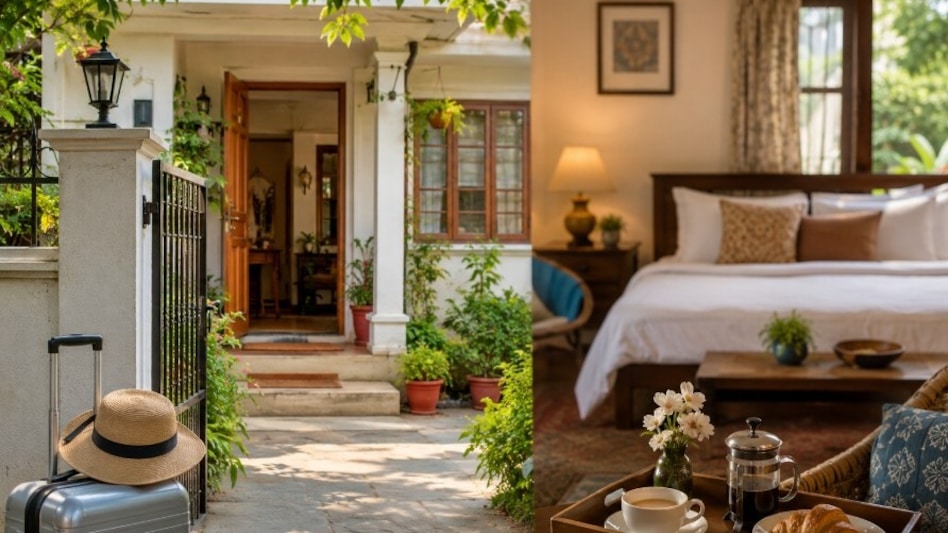
 According to the draft policy, encouraging B&B establishments can promote inclusive tourism, support local communities, and create additional household income streams.
 According to the draft policy, encouraging B&B establishments can promote inclusive tourism, support local communities, and create additional household income streams.
The Delhi government has unveiled the draft Bed and Breakfast (B&B) Policy 2026, a move that could allow homeowners to legally earn income by hosting tourists in their homes. The proposed framework aims to create a regulated homestay ecosystem while expanding affordable accommodation options for visitors and generating additional income opportunities for residents.
The Department of Tourism has placed the draft policy in the public domain and invited comments and suggestions for 30 days before finalising the framework. If implemented, the policy could revive Delhi's homestay sector and provide homeowners with a new avenue for monetising spare rooms.
New B&B policy
Delhi attracts millions of domestic and international visitors every year thanks to its historical monuments, cultural attractions, food hubs, markets, and three UNESCO World Heritage Sites. However, travel preferences are evolving globally.
Many tourists today prefer smaller, community-based accommodations that offer a more personalised experience compared to traditional hotels. The Delhi government believes a structured Bed and Breakfast policy can help meet this demand while supplementing the city's existing hotel infrastructure.
According to the draft, encouraging B&B establishments can promote inclusive tourism, support local communities, and create additional household income streams.
MUST READ: By Europeans, for Europeans? After Delhi's Gymkhana, focus turns to Mumbai’s Breach Candy Club
How can homeowners earn
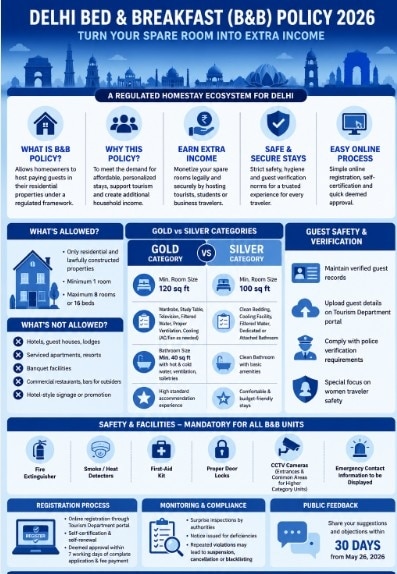
Under the proposed policy, residents can register eligible residential properties as Bed and Breakfast units and offer accommodation to paying guests.
The policy allows:
A minimum of one guest room
A maximum of eight rooms
Up to 16 beds in total
This means homeowners with unused rooms or extra floors could potentially generate regular income from tourists, business travellers, students, and other visitors seeking affordable accommodation.
However, only lawfully constructed residential properties will qualify for registration.
Which properties are not allowed?
The proposed framework clearly separates homestays from commercial hospitality businesses.
The following will not be eligible:
Hotels
Guest houses
Lodges
Serviced apartments
Resorts
Banquet facilities
Commercial hospitality establishments
In addition, operators will not be allowed to run commercial restaurants, bars open to outsiders, or use hotel-style commercial signage.
MUST READ: BT Explainer: Delhi is seeing frequent sandstorms. Why the Aravalli barrier is failing
Gold and Silver categories
One of the key features of the draft policy is the introduction of Gold and Silver classifications for B&B units.
Gold category
Gold-rated establishments will need to meet higher standards, including:
Minimum room size of 120 sq ft
Wardrobes and study tables
Television
Filtered drinking water
Proper ventilation
Fans or air-conditioners where required
Bathrooms must be at least 40 sq ft and include running hot and cold water, western-style toilets, ventilation systems, and enhanced amenities.
Silver category
Silver-category units can have:
Minimum room size of 100 sq ft
Clean bedding
Cooling facilities
Filtered drinking water
Dedicated or attached bathrooms
The classification system aims to help guests identify accommodation standards before booking.
Safety rules
Guest safety, especially for women travellers, is a major focus of the draft policy.
All registered operators will be required to:
Maintain guest registers
Record identity documents
Upload guest details through the tourism portal
Follow police verification requirements
Display emergency contact information
Safety infrastructure such as fire extinguishers, smoke or heat detectors, first-aid kits, and functional door locks will be mandatory. Higher-category units may also be required to install CCTV cameras at entrances and common areas.
MUST READ: ₹85,000 needed just for survival? IITian's viral post on cost of living in Delhi-NCR shocks netizens
How will registration work?
The policy proposes a largely digital process.
Applications will be submitted through an online Tourism Department portal under a self-certification and self-renewal framework. The draft proposes deemed approval within seven working days after submission of a complete application and payment of fees.
If rules are violated...
Authorities will have the power to inspect registered properties, including surprise inspections. If deficiencies are found, notices may be issued requiring corrective action.
Repeated violations could result in suspension, cancellation of registration, or blacklisting of the property.
What does it mean for Delhi residents?
For homeowners, the proposed B&B Policy 2026 could open a new source of income from underutilised residential space. For tourists, it promises more affordable and personalised accommodation options. If approved, the policy could help revive Delhi's homestay ecosystem while supporting local tourism, employment, and community-based hospitality.
MUST READ: How is Delhi Airport ensuring smooth travel during bad weather?
FAQs
What is Delhi's draft Bed and Breakfast Policy 2026?
Delhi's draft Bed and Breakfast Policy 2026 is a proposed framework that will allow homeowners to legally register residential properties as B&B units and host paying guests. It aims to create a regulated homestay ecosystem, expand affordable stay options, and help residents earn extra income.
How can homeowners earn money under the new Delhi B&B policy?
Homeowners can register eligible residential properties and rent out spare rooms to tourists, business travellers, students, and other visitors. The policy allows at least one guest room and up to eight rooms with a maximum of 16 beds, which can create a steady additional income stream.
Which properties are eligible and which are not allowed under the policy?
Only lawfully constructed residential properties can be registered as B&B units. Hotels, guest houses, lodges, serviced apartments, resorts, banquet facilities, and other commercial hospitality establishments are not eligible under the proposed policy.
What are the Gold and Silver categories in Delhi's B&B Policy 2026?
The policy proposes Gold and Silver classifications based on room size and amenities. Gold category units must meet higher standards such as bigger rooms, wardrobes, study tables, televisions, filtered drinking water, and better-equipped bathrooms, while Silver category units require slightly smaller rooms with basic clean and comfortable facilities.
What safety and registration rules will Delhi B&B operators have to follow?
Operators will need to maintain guest records, verify identity documents, upload guest details on the tourism portal, and follow police verification norms. Safety measures like fire extinguishers, smoke or heat detectors, first-aid kits, emergency contact details, and proper door locks will be mandatory, while registration is expected to happen online through a self-certification process.
 'Fake, incorrect': Govt dismisses report of RBI selling $12 billion gold to save forex reserves
 BT Explainer | How the US forced-labour tariff plan could affect Indian exports
 Not the best solution but a reasonable strategy: Harsh Gupta Madhusudan on India’s petrol-diesel catch-22
 Glenmark guides for ₹17,000-18,000 crore FY27 revenue, sees growth across markets
 USTR report on Section 301, proposed 12.5% tariff cast fresh shadow on India-US trade talks
 Metal Stocks Rally Hard: Is There More Upside Ahead? Devarsh Vakil Explains
 PVNA Group – Powering India’s Automotive Supply Chain
 How To Safely Withdraw Monthly Income From ₹1 Crore & Still Grow It! SWP Secret Explained
 Crude Pivot: Venezuela Acting President Delcy Rodríguez To Meet PM Modi On Working Visit To India
 Stop Blindly Investing! How To Calculate Your Exact Monthly SIP Based On Life Goals
 TCS, Infosys, HCL Tech, TechM, Wirpro, Coforge, LTTS: IT stocks to buy— Check price target
 Apollo Micro Systems shares hit record high, then slip 9%; here are fresh price targets
 Sensex, Nifty: Six reasons why stock market is down today
 Market volatility, MTF, geopolitics and investor mistakes: Jainam's CBO explains
 NHPC shares surge 5% on strong OFS response; retail subscription at 20%