This suggests that domestic institutional flows have more than absorbed the sustained FPI selling, thereby providing stability to the equity markets. Much of this resilience has been driven by increased retail participation through SIPs. Monthly SIP contributions have consistently remained above Rs 30,000 crore since March 2026. Excluding FY21, monthly SIP contributions have only moved up, proving the stickiness and long-term nature of retail investment.
However, we do not believe that India’s macro fundamentals are strong enough and are susceptible to downside risk. Restricted Strait of Hormuz passage, extension of the Houthis-led Strait of Bab al-Mandeb blockade or China restricting its SPR drawdown can exert upward pressure on global crude prices.
The silver lining though is that with moderating oil prices, India’s CAD outlook has improved from 2.2 per cent of GDP earlier estimated to 1.9 per cent for FY27 with Brent crude to average USD 85 per barrel. However, export growth (17.5% YoY in 1QFY27) is artificially boosted by a weak rupee and a China-dependent re-export model, lacking real domestic value- addition.
In fact, service exports contracted 6.8 per cent YoY in 1QFY27 due to the AI impact on IT/BPM, eroding India's traditional external buffer. FDI remains structurally weak, and FPI outflows continue, pushing reliance on engineered debt inflows. A durable recovery in foreign flows will likely require earning upgrades, Rupee stability and favorable policy treatment for foreign capital. Financing gaps via debt rather than fixing fundamentals leave Indian equities, the rupee and rate-sensitive sectors exposed to global shocks.
In such a scenario, the market is not underestimating external risks; but working with increased risk appetite owing to solid gains in broader markets in the last 2 months and having seen the stress case scenario of crude prices at $ 110 for 2 weeks. Against this backdrop, we continue to see attractive opportunities emerging through selective stock picking and structural long-term themes, despite an environment that appears challenging at the headline level.
BT: The Q1FY27 earnings season has largely met expectations, with sectors such as banking, capital goods and select industrials performing well, while IT and consumption have remained mixed. Which sectors have surprised you the most, and where do you see earnings upgrades or downgrades over the next two quarters?
Poddar: In the Q1FY27 earnings season, so far about 225 companies in the Nifty 500 have declared their results. Excluding financial services and Oil & Gas (due to extraordinary losses), we have analyzed results for 148 companies, which posted net income growth of 13.8 per cent YoY despite a marginal 49bps decline in net income margin. Of these, consensus estimates are available for 139 companies, with revenues largely in-line while EBITDA margin has seen a beat of 183bps.
Autos have emerged as the standout performer, delivering 36.9% growth in revenue while EBITDA grew by 36.7 per cent, sustaining margin. The sharp EBITDA beat of 296 bps highlights strong operating leverage, a favorable product mix and effective cost control, suggesting that margin remains resilient despite a challenging macro environment.
Capital Goods beat EBITDA estimates by 11.5 per cent, with a 170bps margin surprise. Chemicals have also surprised positively, with a 13.7 per cent EBITDA beat despite modest 2.5 per cent revenue surprise driven primarily by lower cost inventory sold at higher realizations Profitability held up in Power as well, with a 7.2 per cent EBITDA beat and 5. per cent% PAT beat, even as revenues stayed soft.
IT was more mixed, with its 6.9 per cent EBITDA surprise driven by cost optimization rather than revenue growth, while FMCG delivered in-line revenue alongside a 5.3 per cent EBITDA beat.
Going into the next two quarters, Autos should continue to perform well in Q2, aided by stronger-than-expected demand, lean channel inventory, an accelerated new-launch pipeline and rising EV penetration — though Q3 carries base-effect risk given last year's GST-rationalization tailwind. We don’t see downgrades in FMCG, but monsoons, festive-season demand and inflation are key monitorable.
Overall, earnings trends suggest that corporate profitability remains more resilient than expected. While geopolitical risks continue to warrant monitoring, the earnings season so far indicates that their impact on operating performance has been less severe than markets had anticipated.
BT: Crude oil prices and the rupee remain key variables for Indian markets. How do you see the trajectory of oil prices and the INR influencing inflation, RBI policy, corporate margins and sectoral leadership going forward? Which sectors stand to gain or lose the most?
Poddar: Brent Crude's volatility around $85-100/bbl. amid recurring West Asia tensions is driving an elevated Q1FY27 trade deficit, with CAD projected at 1.8-1.9% of GDP for FY27E. This range hinges on oil, staying near $85/bbl. rather than climbing back toward $100. The rupee, down over 10 per cent YoY, transmits this pressure directly into imported inflation.
Higher oil and a weaker rupee are feeding into WPI inflation and input costs, with elevated crude capable of materially lifting non-financial raw-material costs at $90 levels. Margins get squeezed where pass-through is limited, tilting the macro toward slower growth and higher inflation, and raising the odds of RBI discomfort beyond the 5 per cent threshold with an eventual policy tightening towards the end of 2026.
We expect global geopolitical negotiations and supply responses to limit a sustained move in crude above $100/bbl. A lower-than-expected crude average combined with moderation in AI-driven capital allocation could improve relative flows into emerging markets, making India an attractive destination for global alpha allocators.
BT: Several heavyweight sectors—including banking, defence, capital goods, telecom, power, manufacturing and select PSU stocks—have delivered strong returns over the past year. Which sectors and stocks do you believe still offer attractive risk-reward opportunities, and where would you advise investors to book profits or remain cautious?
Poddar: We remain constructive on metals, particularly cost-advantaged aluminum and copper producers. Elevated global prices, supported by supply-side disruptions and tight inventories, continue to expand profitability, while structurally low-cost producers remain well positioned to sustain earnings upgrades.
Defence remains in the early stages of a multi-year investment cycle rather than approaching maturity. Capacity expansion, a robust order pipeline and increasing indigenization continue to improve earnings visibility, while production is expected to scale towards Rs 3 lakh crore by FY29E.
We also remain positive about the power ecosystem. Peak electricity demand is expected to rise to nearly 388 GW by FY32E, necessitating significant investments across generation, transmission and energy storage. Planned transmission capex of nearly Rs 9 lakh crore, coupled with accelerating investments in battery energy storage systems (BESS) to support renewable integration, should provide a long runway for growth.
Pharmaceuticals continue to offer an attractive risk-reward profile, supported by increasing opportunities in complex generics, GLP-1 products such as semaglutide and continued momentum in the CDMO segment, all of which should support margin expansion and sustainable earnings growth.
The healthcare sector is witnessing sustained improvements in occupancy, ARPOB, cash flows and ROCE, driven by disciplined capacity expansion and operating leverage. Recent CGHS tariff revisions are expected to enhance realizations and profitability, with potential spills over other reimbursement schemes. With an estimated requirement of ~3 Mn additional hospital beds and strong expansion into Tier-II/III cities, the sector remains in a long-term expansion cycle with robust growth visibility.
Within technology, we remain selective. While traditional IT services continue to benefit from robust deal wins, revenue conversion remains slow and FY27E growth is likely to remain in the 5–8 per cent range. We therefore prefer new-age technology companies that are demonstrating tangible AI monetization, stronger revenue growth, and expanding profitability.
Autos continue to exhibit structural strength, supported by resilient domestic demand, healthy inventory levels, active product launch cycle, and increasing EV penetration. Together, these factors should sustain volume growth, operating leverage, and earnin W gs momentum over the medium term.
Conversely, we remain cautious on consumer discretionary, upstream oil & gas and traditional IT services, where earnings expectations appear fully priced in or valuation multiples have expanded significantly ahead of fundamentals. Overall, we expect alpha generation to be increasingly driven by earnings delivery rather than broad market re-rating.
BT: India's primary market continues to witness strong momentum, with marquee IPOs and a healthy pipeline despite broader market volatility. Do you think current IPO valuations remain justified, or are we beginning to see signs of exuberance? Which sectors in the IPO space look most promising over the next 12 months?
Poddar: India has raised nearly Rs 49,000 crore across 37 issues in 2026, with July alone drawing Rs 26,279 crore from just seven names and a Rs 25,000 crore August pipeline. But the real signal is pricing discipline. Zepto is reportedly deferring its listing because institutions are valuing it at $2.5-3 billion less than half the $7 billion it commanded privately in October 2025.
When buyers push back this hard on a marquee name, that's a healthy, self-correcting market, not a frothy one. Capital is concentrating on scale, profitability, and governance. So, valuations at the top are largely justified; the froth sits in thin, mid-cap issues. Over 12 months I would watch financial services, profitable consumer-tech and logistics.
BT: Foreign institutional investors have turned more constructive on Indian equities after periods of volatility, while domestic institutional investors continue to provide strong support. Do you expect FII inflows to sustain in the second half of 2026, and what global triggers could reverse these flows?
Poddar: If you track the FII numbers month on month, the story is already turning. Outflows have narrowed sharply from over Rs 1.2 lakh crore in March to positive in July. The reasons FIIs left in the first place are now reversing. The AI and semiconductor rally that pulled money into other markets is cooling South Korea's KOSPI and Taiwan's TAIEX are sharply down. Thus, 'India has no AI play' argument has lost its edge. The rupee has stabilised on the back of decisive RBI action, including the FCNR-B window.
On the domestic side, people often read strong DII and SIP flows negatively, as DIIs simply give FIIs an exit. I read it the opposite way. It signals maturity our market is no longer hostage to foreign flows, and that liquidity assures FIIs they can enter and exit freely. That confidence is exactly what pulls them back. Once crude cools, I expect FIIs to return more decisively.
BT: Looking ahead to the rest of 2026, what are the three biggest catalysts that could determine the direction of Indian equities? Could it be earnings growth, RBI policy, global interest rates, geopolitical developments, commodity prices, or domestic reforms? How should investors position their portfolios amid these evolving risks and opportunities?
Poddar: Despite all the geopolitical noise this year, India's fundamentals have held up better than most comparable markets. Q1 FY27 earnings have been decent since the Nifty recovered around 6.6% in the quarter, with domestic-facing sectors like manufacturing, infrastructure and financials leading, and corporate capex and manufacturing data staying encouraging.
But the real catalyst to watch is global interest rates, particularly in the US. There's a real chance of a hike in the second half if inflation stays sticky, and if the Fed moves, the RBI has the room and the readiness to respond. The second big swing factor is geopolitics, especially any fresh escalation in the Middle East. And tied to that, the single most fundamental variable is oil and commodity prices; that is where the genuine, lasting impact on our markets lies.
My advice to investors is "don't try to time it. Invest in tranches and keep buying through corrections. The long-term view on India is firmly positive and once oil cools, I'd expect the markets to make new highs."



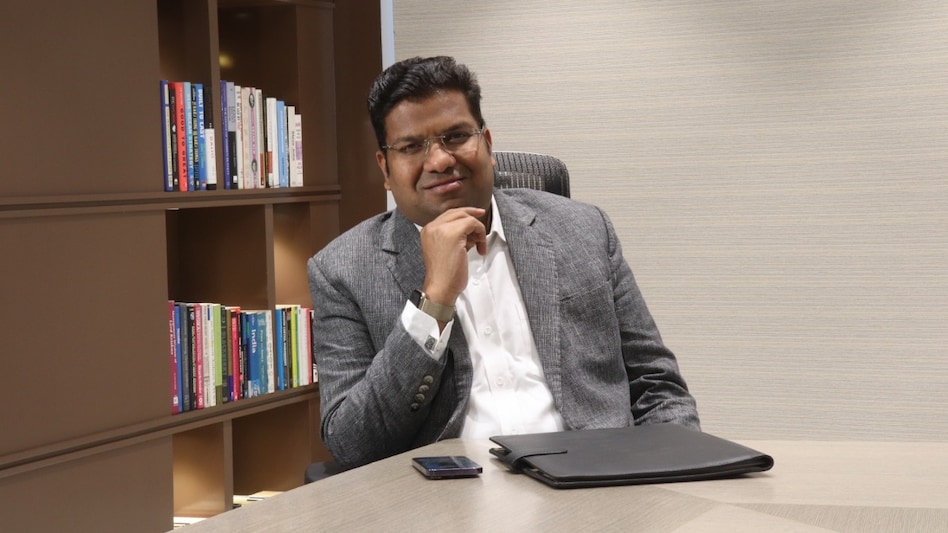 Arun Poddar, CEO of Choice International
 'RBI letter does not mention listing': Noel Tata seeks full briefing on Tata Sons-RBI talks
 Tata Trusts asks Tata Sons to explore options other than listing, says ‘Tata Model has to be saved’
 Tata Trusts proposes ₹25,000 crore plan for SP Group, says Tata Sons listing is not an option
 Chandrasekaran had assured all necessary steps were being taken to remain private: Noel Tata
 'We cannot put the cart before...': Noel Tata's argument against N Chandrasekaran's reappointment
 How India Changed In 12 Years: PM Modi’s Journey From Economic Reforms To Viksit Bharat
 Modi @76: From Twitter To Instagram, How His Digital Outreach Has Evolved
 Stock Picks To Watch: Shibani Kurian Reveals Kotak AMC’s Market Bets
 Gold ETF vs Physical Gold: Know the Tax Rules, Charges and Key Differences
  PPF vs NPS: Tax Benefits, Returns and Lock-in Period Explained for Retirement Planning
 Hero Motors IPO subscribed 3.37 times on Day 2; retail portion subscribed over 5 times
 NSE IPO: India's largest exchange gets 43% subscription on Day 1; NIIs, retail see strong demand
 Rentomojo shares settle maiden trade nearly 32% above IPO price; what should investors do now?
 Sensex slips, Nifty settles higher; Tata stocks gain after N Chandrasekaran reappointment
 Cochin Shipyard, KRBL, RITES, Ramky Infrastructure among stocks to turn ex-dividend on September 18
 Micron workers reject 68 months’ pay, demand 15% of AI boom profits
  Australia to restrict family visas for international students: What Indian applicants need to know
 ₹11.5 lakh fine after 132 years! Magazine borrowed in 1894 finally returned to library
 From a 10-year-old fashion designer to a 5-year-old yoga instructor: Meet Guinness World Records’ Young Achievers 2027
 Tata Sons listing explained: Why the holding company was required to go public












