









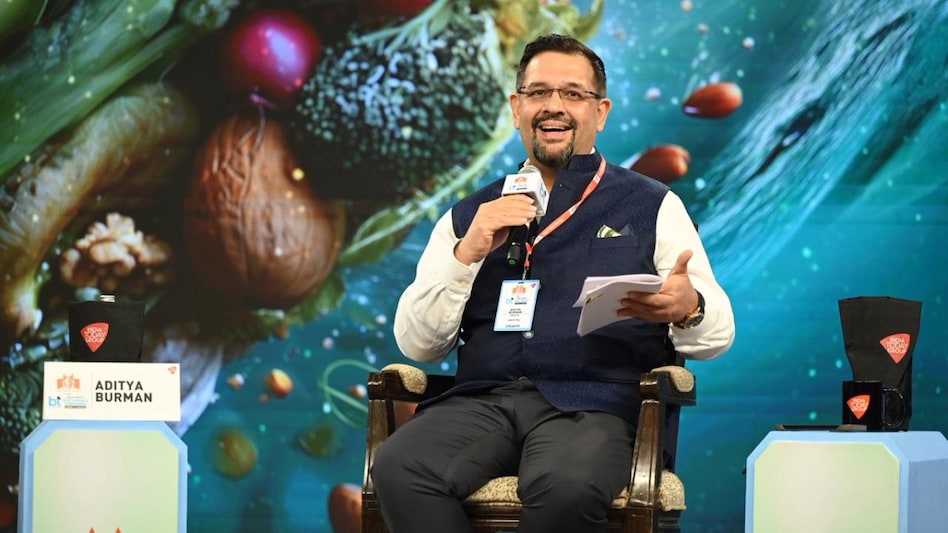
 On shifting consumer behaviour, Burman said the divide between urban and rural India is narrowing rapidly. On shifting consumer behaviour, Burman said the divide between urban and rural India is narrowing rapidly.
 "It is more difficult, actually, as an affluent consumer to consume responsibly," said Aditya Burman, Director, Dabur India, at the BT India's Most Sustainable Companies Summit & Awards 2026. Flipping the conventional narrative, he pointed out that rural consumers have always practised responsible buying, carrying their own bags and containers to the store, long before sustainability became a buzzword.
He further added that Dabur, a 140-year-old brand was founded at a time when product quality was inconsistent and consumers had little clarity on what they were buying. Dabur's founding promise was simple: tell people exactly what is inside. That ethos, Burman said, holds even today.
On Dabur's sustainability initiatives, Burman said the company now takes out more plastic from the environment than it puts in and is likely the first FMCG company in India to have achieved this. He credited India's growing recycling ecosystem for making it possible.
Water conservation is equally central. Dabur has been practising rainwater harvesting across its facilities well before it became an industry norm, and continues to invest in water structures and ponds in partnership with communities across the country.
Burman said that authenticity of sustainability starts from sourcing.
"As the largest honey brand in India, we have done programmes to track our honey." The philosophy extends across the products.
"We believe from farm to shelf, from seed to shelf, from hive to shelf we need to know where things are coming from and how good they are." He added.
Dabur currently works with over 14,000 farming families across 16,000 acres. In the Sundarbans, the company partners with tribal honey collectors, bringing in international expertise and training. "This is not just going to create more honey," Burman said. "This is going to create economic upliftment."
On shifting consumer behaviour, Burman said the divide between urban and rural India is narrowing rapidly. "The same people have access to the same content, the same ideas, by the touch of a button." Younger consumers, he noted, are asking more questions about ingredients, sourcing, and impact and Dabur is glad to answer them.
He also pointed to a broader shift: FMCG, in many ways, is becoming healthcare. Dabur's Real Juice range is a case in point as it has expanded into seasonal fruit variants in direct response to consumers who are increasingly health-conscious and ingredient-aware.
FAQs
Why did Aditya Burman say affluent consumers find it harder to consume responsibly?
Aditya Burman said affluent consumers often have more choices and convenience-led habits, which can make responsible consumption harder. He contrasted this with rural consumers in India, who have long practised sustainable habits such as carrying their own bags and containers.
What is Dabur’s founding promise and how does it connect with sustainability today?
Dabur was founded around a simple promise: tell consumers exactly what is inside the product. According to Burman, this focus on transparency still guides the company today and supports its wider sustainability approach across quality, sourcing and consumer trust.
What sustainability initiatives has Dabur implemented in plastic and water conservation?
Burman said Dabur now removes more plastic from the environment than it introduces, making it one of the first FMCG companies in India to do so. He also highlighted Dabur’s long-standing rainwater harvesting efforts and its investments in water structures and ponds with communities across the country.
How does Dabur ensure authentic and sustainable sourcing for its products?
Dabur believes sustainability begins at sourcing, with traceability from farm to shelf, seed to shelf and hive to shelf. The company tracks honey sourcing, works with more than 14,000 farming families across 16,000 acres, and partners with tribal honey collectors in the Sundarbans to improve quality as well as livelihoods.
How is changing consumer behaviour influencing Dabur’s product strategy?
Burman noted that younger consumers are more aware and ask sharper questions about ingredients, sourcing and impact. He added that FMCG is increasingly merging with healthcare, and cited Dabur’s Real Juice range, including seasonal fruit variants, as a response to rising demand for healthier and more ingredient-conscious choices.
 Rajesh Exports shares in free fall mode: Back-to-back lower circuits - What SEBI Chairman said
 Why Adani is onboarding L&T for nuclear power projects?
  IT hiring falls to 28-month low, but demand for AI talent remains strong
 Lilly’s experimental drug now shows benefits across obesity, diabetes, other conditions
  Three Air India aircraft damaged in storm in Delhi; DGCA orders probe
 "We Are Ready To Sell Su-57 To India": Putin Makes Big Fighter Jet Offer
 Russians, Americans & Indians Are Betting Big On UAE Real Estate | Ankur Aggarwal, BNW Developments
 How PM Modi’s Ujjwala Yojana Transformed 10 Crore Families and Empowered Women Across India
 TECH-IT-EASY | The Tech Gear Show EP 5 | Latest Technology News | Business Today
 Latest Launches Of The Week With AI SANA | Tech Gear EP 5 | Business Today
 Vodafone Idea, Bharti Airtel share price targets: This chart shows why tariff hikes from Q2 hold the key
 CMR Green IPO: Step-Step to guide to check your allotment status on BSE, NSE as GMP zoomsRajesh Exports shares in free fall mode: Back-to-back lower circuits - What SEBI Chairman said
 Wipro, MTAR Technologies, Netweb Technologies shares slip up to 8% today
  YES Bank shares rebound to near 52-week high despite GST notice; check target price & more