


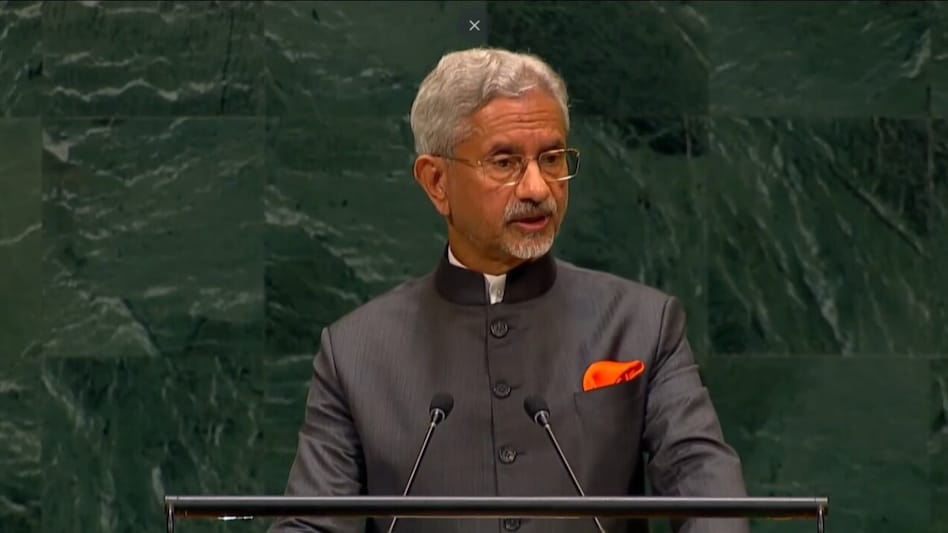
 During his interaction with Bloomberg’s Editor-in-Chief John Micklethwait. Jaishankar said that AI can not be compared with any other technological advancements, including nuclear technology.
India's External Affairs Minister S. Jaishankar called for strong artificial intelligence (AI) regulation, guardrails, and inclusiveness to prevent misuse and ensure that it is responsibly developed. At the Bloomberg New Economy Forum, Jaishankar also advocated for a people-centric approach to AI, but with caution.
During his interaction with Bloomberg’s Editor-in-Chief John Micklethwait. Jaishankar said that AI can not be compared with any other technological advancements, including nuclear technology. “AI is, in that sense, mother of all technologies that we know so far,” he said.

 Festive bonanza for Railway employees: Cabinet likely to approve productivity linked bonus, say sources
 ‘Not served with any suit…’: Bank of Baroda clarifies after NMC Health’s founder BR Shetty files $15 billion lawsuit
 BT BIG STORY: Your next colleague could be an AI agent. What does that mean for Indian IT, and for your job?
 BT Explainer: Why is Bank of Baroda facing a lawsuit from founder of NMC Health, BR Shetty?
 'Not for us, but for the world': Trump defends Russia diesel deal, restrictions against India remain
 Rupee Rebounds Past 95 Per Dollar As RBI Measures Curb Volatility | Gaurav Sharma Explains Market Outlook
 The Best Tech At IMC 2026, Asus ROG Zephyrus G14 & Sennheiser Momentum 5 Review | Tech Today
 Vijay Meets Chandrababu Naidu: Godavari-Cauvery Link, Politics & Star Power In Focus
 Shashi Tharoor On Gyanesh Kumar: Is Impeachment The Only Route To CEC Accountability?
 TCS, HCLTech Rally Amid Global AI Jitters: What's The Next Market Move?
 SS Retail shares zoom nearly 20% on strong maiden earnings after listing
 IDBI Bank shares rise 13% ahead of Q2 earnings
  Tata Elxsi shares jump 8% after Q2 results; 'Sell' stock, says 5 analysts; target prices
 Polycab India shares slip over 5%; here's what is weighing on the stock
 Reliance Power shares fall 2% as ED seizes Sasan Power shares worth Rs 2,027 croreRupee Rebounds Past 95 Per Dollar As RBI Measures Curb Volatility | Gaurav Sharma Explains Market OutlookThe Best Tech At IMC 2026, Asus ROG Zephyrus G14 & Sennheiser Momentum 5 Review | Tech TodayVijay Meets Chandrababu Naidu: Godavari-Cauvery Link, Politics & Star Power In Focus
 Bank of America hit by $1.2 billion penalty: Why US regulators are cracking down on the bank
 Setback to CJP: Saurav Das, Ashutosh Ranka sent to 5-day judicial custody in Tihar Jail












