


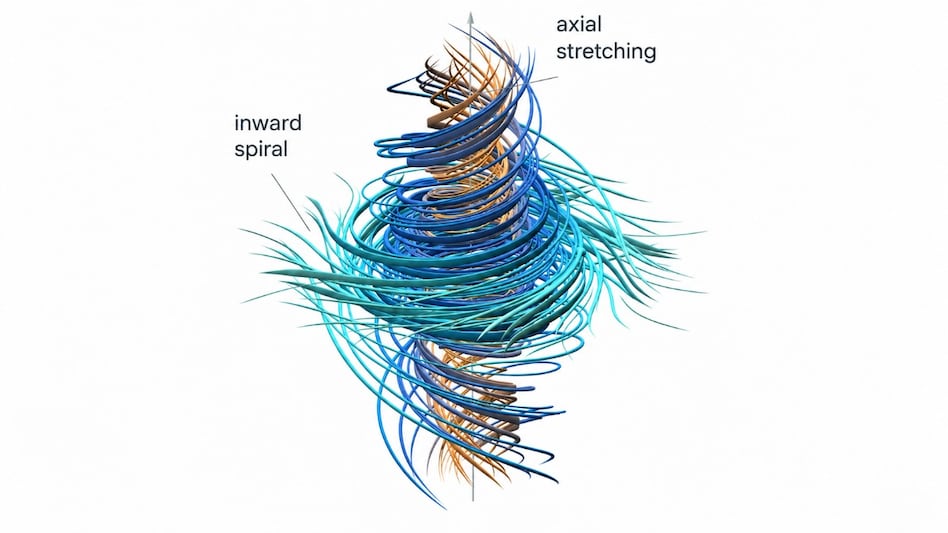
 OpenAI says its AI agents resolved the 90-year-old Navier-Stokes problem(Photo: OpenAI)
OpenAI claims it has solved the 90-year-old Navier-Stokes mathematics problem in just 88 hours using a new internal AI model and around 10,000 AI agents. The problem is one of the famous Millennium Prize Problems and focuses on how fluids such as water and air behave.
Must Read: Why Sarvam CEO believes India is set to hijack the global AI race on a budget

 BRICS Summit 2026: PM Modi, Xi Jinping expected to hold first bilateral after six years
 Airspace curbs, beautification, traffic restrictions: How Delhi is preparing for BRICS Summit
 Apple’s ₹4.5 lakh iPhone Duo: 5 features that set foldable apart, coming to India in October
 Jefferies sees 46% upside potential in this Adani stock; shares targets for AGEL, Adani Power
 NSE IPO update: RHP filed; offer size revised - what has changed | Price Band announcement on Sept 11
 Gold Loan Stocks In Focus: Muthoot, Manappuram & Titan Among Top Picks For Festive Season
 Real Estate Stocks In Focus: Expert Reveals Names Top Picks Amid Strong Project Demand
 Delhi PG Mafia Exposed: Inflated Rents & DU Hostel Shortage Crisis | India Today Investigation
 Large Caps Struggle: Why Mid & Small Caps Could Outperform In This Market
 $136 Billion FCNR Inflow: Will Liquidity Boost Credit Growth, Consumption & Private Capex?
 Wipro shares hit 52-week low, down 38% this year; more pain likely on IT counter?
 Indoco Remedies shares jump 7% after 5-day fall; UK regulator clears Goa plant inspectionJefferies sees 46% upside potential in this Adani stock; shares targets for AGEL, Adani Power
 Novartis India shares soar 18% to record high; extend 9-day gains to 74%; here's whyNSE IPO update: RHP filed; offer size revised - what has changed | Price Band announcement on Sept 11Gold Loan Stocks In Focus: Muthoot, Manappuram & Titan Among Top Picks For Festive SeasonReal Estate Stocks In Focus: Expert Reveals Names Top Picks Amid Strong Project DemandDelhi PG Mafia Exposed: Inflated Rents & DU Hostel Shortage Crisis | India Today Investigation
 iPhone Duo at ₹2,99,900? The funniest salary, foldable and durability memes taking over social media after launch
 Russia's big aviation push in India: Talks underway for passenger aircraft, jet production












