


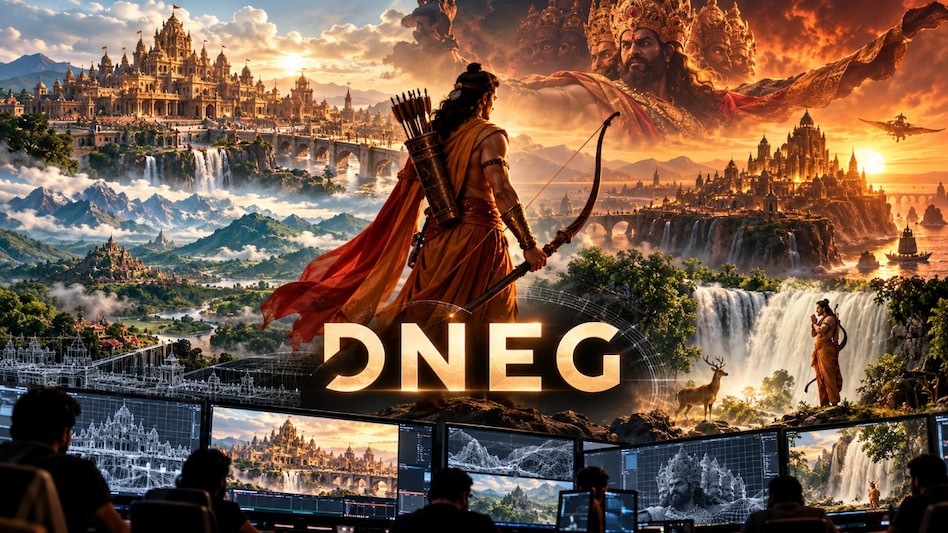
 'Ramayana: Part One' is emerging as one of the most ambitious Indian film production
s, combining the scale of the ancient epic with international filmmaking expertise and advanced visual effects. At the centre of the project is DNEG, the visual effects studio led by Namit Malhotra, working alongside ReDefine to bring the film’s expansive cinematic world to life.
Directed by Nitesh Tiwari and produced by Prime Focus Studios in association with Yash’s Monster Mind Creations, the film features Ranbir Kapoor as Rama, Sai Pallavi as Sita, Yash as Ravana, Sunny Deol as Hanuman and Ravie Dubey as Lakshmana.
 RIL Q2 profit jumps 41% to Rs 25,548 crore; Jio ARPU rises to Rs 218.8
 Bank of Baroda raises lending, deposit growth guidance amid strong traction for second successive quarter
 MCA clarifies role in NCLT appointments after SC flags interference; says tribunal independently manages staff
 HAL, Kotak Bank, Tech Mahindra, Sona BLW Precision: Top Diwali 2026 Picks by Axis Securities
 Sensex, Nifty extend recovery; what's driving this upmove?
 Should You Buy Gold Now? Investor Explains the 10-Year Yield Trigger
 IDBI Bank Sale Row: Rahul Gandhi vs Nirmala Sitharaman | Congress, BJP Clash Over Deal
 Where Is The Value In Indian Markets? Nischal Maheshwari On Banking, Consumption & Growth Stocks
 Daily Calls: Ask Your STOCK MARKET TODAY QUERIES | Market Update| Share Market News Today
 Market Guru Nischal Maheshwari On Nifty Outlook, Top Sectors & Diwali Investment Strategy

 US debt ceiling crisis in 2027? Why Indian markets should watch the November midterm elections
 Foreign investors are turning cautious on India: Should stock market investors worry?RIL Q2 profit jumps 41% to Rs 25,548 crore; Jio ARPU rises to Rs 218.8
 Delhivery's Q2 revenue tops Rs 3,000 crore, EBITDA triples
 Bank of Baroda Q2 earnings: Net profit rises 36%, bad loans fall
 From OTT hit to ₹336-crore movie! Mirzapur's box-office journey takes an unexpected turn
 Jio's next growth bet: How AI, cloud, financial services and enterprise businesses could drive expansionUS debt ceiling crisis in 2027? Why Indian markets should watch the November midterm elections
 Vande Bharat Sleeper train launches today: Varanasi-Delhi timings, ticket prices, route, stops and key features
 Financial Horoscope Today, October 31, 2026: Leo Signs Will Receive Pending Money, Know the Status of All Signs












